Korean-Style Spicy Chicken Stew
There is something deeply comforting about a pot of spicy chicken simmering away until the broth turns rich, glossy, and full of flavor. This dish brings together tender chicken, soft potatoes, sweet carrots, and a fiery Korean-style sauce that wraps around every bite. Trust me, you’re going to love this, especially on a day when you want dinner to feel cozy, bold, and just a little exciting.
Why This Stew Always Feels Like the Right Dinner
Some meals are satisfying, and then there are meals like this one, the kind that fill the kitchen with the smell of garlic, soy, and chili until everyone starts asking when dinner will be ready. This one’s a total game-changer because it gives you hearty comfort and punchy flavor at the same time. The chicken turns tender as it simmers, the vegetables soak up the sauce, and the whole pot becomes one of those dinners that somehow tastes even better with each spoonful.
It is the sort of meal that feels generous and relaxed. You bring it to the table bubbling hot, spoon it over rice, and suddenly dinner feels special without being fussy.
A Little Backstory Behind This Fiery Favorite
And now let’s dive into the roots of this dish, because that makes the experience even better. Korean spicy chicken stew is closely related to dakdoritang, also known as dakbokkeumtang, a beloved home-style dish in Korea that is typically made with chicken, potatoes, onions, and a spicy red seasoning built from gochujang, gochugaru, soy sauce, and garlic. It is known for its bold heat, savory depth, and comforting, stew-like finish.
What makes it so memorable is how homey it feels. This is not the kind of food that hides behind fancy presentation. It is rustic, generous, and meant to be shared. Over time, many cooks have added their own small twists, but the heart of it stays the same, chicken and vegetables braised until everything becomes tender, spicy, and deeply satisfying.
Why You Can Count On This Recipe Every Time
Before we get to the bubbling pot, it helps to know why this version works so well in a real kitchen, especially on busy nights.
Versatile: This recipe fits a casual family dinner, a cozy weekend meal, or even a small gathering with friends. Serve it with rice, noodles, or a few simple side dishes and it settles right in.
Budget-Friendly: Chicken thighs, potatoes, carrots, and onions do a lot of heavy lifting here. You get a pot full of flavor from ingredients that are easy to find and usually pretty affordable.
Quick and Easy: Once the sauce is mixed and the vegetables are chopped, the stove does most of the work. The simmering time is what transforms everything into something irresistible.
Customizable: You can adjust the heat level, add mushrooms, swap in extra green onions, or make the broth a little looser depending on how you like to serve it.
Crowd-Pleasing: The balance of spicy, savory, slightly sweet, and deeply comforting makes this one hard to resist. Let me tell you, it’s worth every bite.
Make-Ahead Friendly: The flavors settle and deepen as it rests, which means leftovers are every bit as exciting as the first bowl.
Great for Leftovers: Spoon it over fresh rice the next day, tuck it into a lunch bowl, or warm it up for a quick dinner that tastes like you planned ahead.
Smart Cook Secrets for the Best Pot
Now that the craving is officially real, here are a few insider tricks that make a good stew turn out even better.
- Use bone-in chicken if you can: It gives the broth more body and richness, and the meat stays especially juicy as it cooks.
- Cut the vegetables into large chunks: That way they soften beautifully without falling apart too early.
- Mix the sauce before it hits the pot: This helps the gochujang and chili flakes dissolve more evenly, so the flavor is balanced from the start.
- Simmer gently, not aggressively: A lively simmer is perfect, but a hard boil can toughen the chicken and break down the vegetables too fast.
- Add green onions near the end: They keep their fresh flavor and brighten the whole dish right before serving.
Kitchen Tools That Make This Easy
The beauty of this meal is that it does not ask for much, but a few basic tools make the whole process smoother.
Dutch oven or heavy pot: A sturdy pot holds heat well and helps the chicken and vegetables cook evenly.
Mixing bowl: You will want this for stirring together the sauce until it is smooth and deeply red.
Sharp knife: Clean cuts help the vegetables cook at the same pace and keep the prep work simple.
Cutting board: A roomy board makes chopping chicken and vegetables a lot less messy.
Wooden spoon or silicone spoon: Perfect for stirring the sauce into the pot without scraping up the vegetables.
The Ingredients That Build All That Flavor
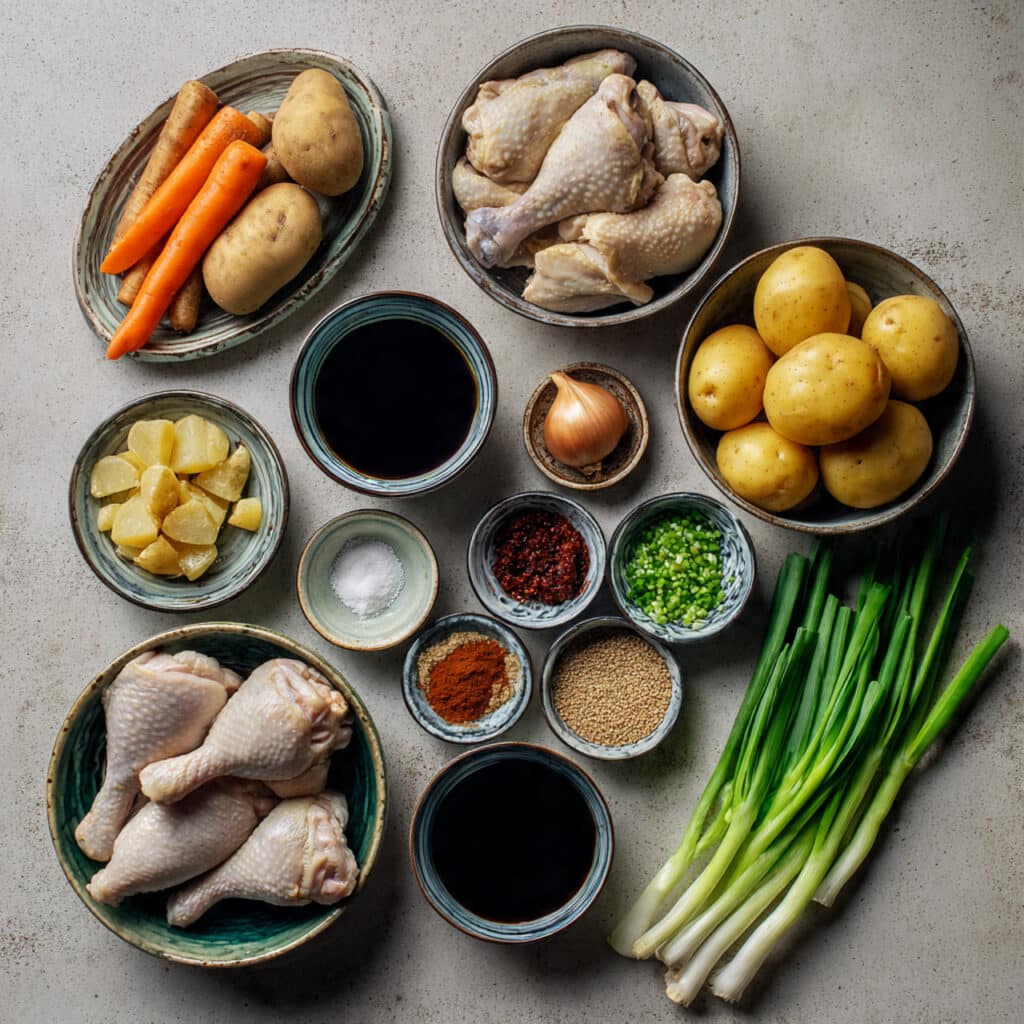
Before the pot starts simmering, let’s talk about the ingredients that make every spoonful taste layered, bold, and comforting. Each one has a real job here, and together they create that irresistible balance of heat, savoriness, and gentle sweetness.
- Bone-in, skinless chicken thighs and drumsticks: 2 1/2 pounds, cut into serving pieces. This is the heart of the dish, and the bones help create a fuller, richer broth.
- Yukon Gold potatoes: 2 medium, about 12 ounces total, cut into large chunks. They soften into the sauce and make the stew feel hearty and satisfying.
- Carrot: 1 large, cut into thick chunks. It adds sweetness and a little color, which plays beautifully against the spicy broth.
- Yellow onion: 1 medium, cut into wedges. As it cooks, it melts slightly into the sauce and adds mellow savoriness.
- Green onions: 3, cut into 2-inch pieces. These bring freshness and a light oniony lift at the end.
- Water or low-sodium chicken stock: 2 cups. This gives the sauce enough room to simmer and deepen without becoming too thin.
- Gochujang: 3 tablespoons. This Korean chili paste creates body, heat, and that signature deep red color.
- Gochugaru: 2 tablespoons. Korean chili flakes add a cleaner, brighter heat and a little smoky depth.
- Soy sauce: 2 tablespoons. It rounds out the stew with savory saltiness.
- Rice wine: 2 tablespoons. This helps balance the richness and adds a subtle sweetness.
- Brown sugar: 1 tablespoon. A small amount softens the heat and helps the sauce feel more rounded.
- Garlic: 1 tablespoon, minced. It gives the broth warmth and a bold, savory backbone.
- Fresh ginger: 1 teaspoon, grated. This adds brightness and a gentle spicy edge that keeps the stew lively.
- Black pepper: 1/4 teaspoon. Just enough to deepen the flavor without distracting from the chili.
- Toasted sesame seeds: 1 teaspoon, for garnish. These add a nutty finish and a little contrast right at the end.
Easy Swaps When You Need Flexibility
And now that the core ingredients are set, here are a few simple substitutions that still keep the soul of the dish intact.
Chicken thighs and drumsticks: Boneless chicken thighs.
Yukon Gold potatoes: Red potatoes or small waxy potatoes.
Carrot: Daikon radish or extra potato.
Yellow onion: White onion.
Green onions: Garlic chives.
Rice wine: Dry cooking sherry or extra stock.
Brown sugar: White sugar or honey.
Gochujang: Use a little extra soy sauce and gochugaru if needed, though the flavor will be less deep.
The Two Ingredients That Really Make It Sing
There are a lot of good things happening in this pot, but a couple ingredients truly define the whole experience.
Gochujang: This thick Korean chili paste is what gives the sauce its savory depth and glossy texture. It is spicy, slightly sweet, and deeply fermented, which makes the broth taste much more complex than heat alone.
Gochugaru: These Korean chili flakes add color and brightness. They bring a cleaner chili flavor that works alongside gochujang instead of competing with it, and that pairing is what gives the stew its signature personality.
Let’s Get This Stew Bubbling
Now comes the fun part, the moment when all those ingredients finally turn into something rich and fragrant. Here are the steps you’re going to follow.
- Preheat Your Equipment: Set a heavy pot or Dutch oven over medium heat so it is ready to go once the ingredients are prepped.
- Combine Ingredients: In a mixing bowl, stir together the gochujang, gochugaru, soy sauce, rice wine, brown sugar, minced garlic, grated ginger, and black pepper until smooth and well blended.
- Prepare Your Cooking Vessel: Add the chicken pieces to the pot, then layer in the potatoes, carrot, and onion around and over the chicken.
- Assemble the Dish: Pour the sauce mixture over everything, then add the water or stock. Gently turn the ingredients so the sauce begins coating the chicken and vegetables.
- Cook to Perfection: Bring the pot to a gentle boil, then reduce to a steady simmer. Cover partially and cook for 30 to 35 minutes, stirring once or twice, until the chicken is tender and the potatoes are soft but still holding their shape.
- Finishing Touches: Add the green onions during the last 3 minutes of cooking. Taste the broth and adjust with a tiny splash of soy sauce or a spoonful of water if needed to balance the seasoning.
- Serve and Enjoy: Spoon the hot stew into bowls, scatter toasted sesame seeds on top, and serve with warm steamed rice so none of that glossy red sauce goes to waste.
The Texture and Flavor Journey in Every Bite
Once the stew is done, the real magic is in the contrast. The chicken is tender and juicy, the potatoes are soft and almost creamy at the edges, and the carrots bring a gentle sweetness that keeps the spice from feeling too sharp. The broth is not thin like a soup, but not too thick either. It lands somewhere deliciously in between, rich enough to cling to the vegetables and light enough to spoon over rice.
Flavor-wise, it starts with savory depth from soy sauce and garlic, then the chili layers come in, warm, bold, and a little smoky. After that, the sweetness from onion and carrot rounds everything out. It keeps changing as you eat, which is part of what makes it so hard to stop.
Helpful Tricks for an Even Better Result
A pot like this is already rewarding, but a few small touches can make it even more reliable.
- Brown the chicken lightly first if you want extra depth: It adds a richer base flavor, especially if you have a few extra minutes.
- Keep your vegetable pieces large: They hold up better during simmering and give the final dish a more rustic, generous feel.
- Let the stew rest for 5 minutes before serving: The broth settles slightly, and the flavors seem to come together even more.
- Serve with plain rice: It balances the heat and lets the sauce shine.
Mistakes Worth Skipping for the Best Finish
Even a cozy dish like this has a few little traps, and avoiding them makes a big difference.
- Do not cut the potatoes too small: They can break down too quickly and make the broth overly starchy.
- Do not boil too hard for the whole cooking time: A harsh boil can toughen the chicken and make the vegetables collapse.
- Do not add all the green onions too early: They lose their fresh pop if they simmer for too long.
- Do not oversalt at the beginning: The sauce reduces as it cooks, so it is smarter to taste near the end.
A Quick Look at the Nutrition
Before you serve up big bowls, here is a simple look at the approximate nutrition for this dish.
Servings: 4
Calories per serving: 430
Note: These are approximate values.
Time You’ll Want to Plan For
This recipe feels like it simmered all afternoon, but it is actually very manageable.
Prep Time: 20 minutes
Cook Time: 35 minutes
Total Time: 55 minutes
Make-Ahead and Storage Tips That Actually Help
One of my favorite things about this dish is how well it fits into real life. You can chop the vegetables and mix the sauce a day ahead, then keep everything chilled until you are ready to cook. That makes dinner feel much easier when the day has already gotten away from you.
Leftovers keep well in an airtight container in the refrigerator for up to 3 days. The flavors deepen overnight, so the next bowl is seriously delicious. For freezing, let the stew cool completely, then freeze in portions for up to 2 months. Reheat gently on the stove over medium-low heat, adding a splash of water or stock if the sauce has thickened too much.
The Best Ways to Serve It
This stew is beautiful on its own, but it really shines when you give it a few simple partners. A bowl of steamed short-grain rice is the obvious favorite because it catches every bit of the sauce. A crisp cucumber side dish or lightly dressed greens can also bring a cool contrast to the heat.
For a fuller spread, serve it with kimchi, quick pickled radish, or sautéed spinach. The mix of spicy, tangy, and savory flavors makes the whole table feel generous and complete.
Leftovers That Deserve a Second Round
And now let’s talk about the part people secretly love, the leftovers. This dish transforms beautifully.
Shred leftover chicken and spoon it over rice for an easy lunch bowl. Mash some of the potatoes into the sauce and toss with noodles for a spicy, comforting twist. You can also warm the stew and serve it with a fried egg on top, which turns it into a deeply cozy next-day meal.
Another good move is to reduce the leftover sauce slightly and use it as a topping for roasted vegetables or a grain bowl. It is bold, savory, and too good to leave behind.
A Few Extra Notes Before You Cook
A recipe like this rewards attention, but it does not need perfection. Taste as you go near the end, especially if your stock is salted. If you want more heat, add another spoonful of gochugaru. If you want the sauce a touch milder, serve it with extra rice and a few cooling sides.
Fresh green onions at the end make a bigger difference than you might think. They brighten the pot and keep the final dish from feeling too heavy.
Make It Look as Good as It Tastes
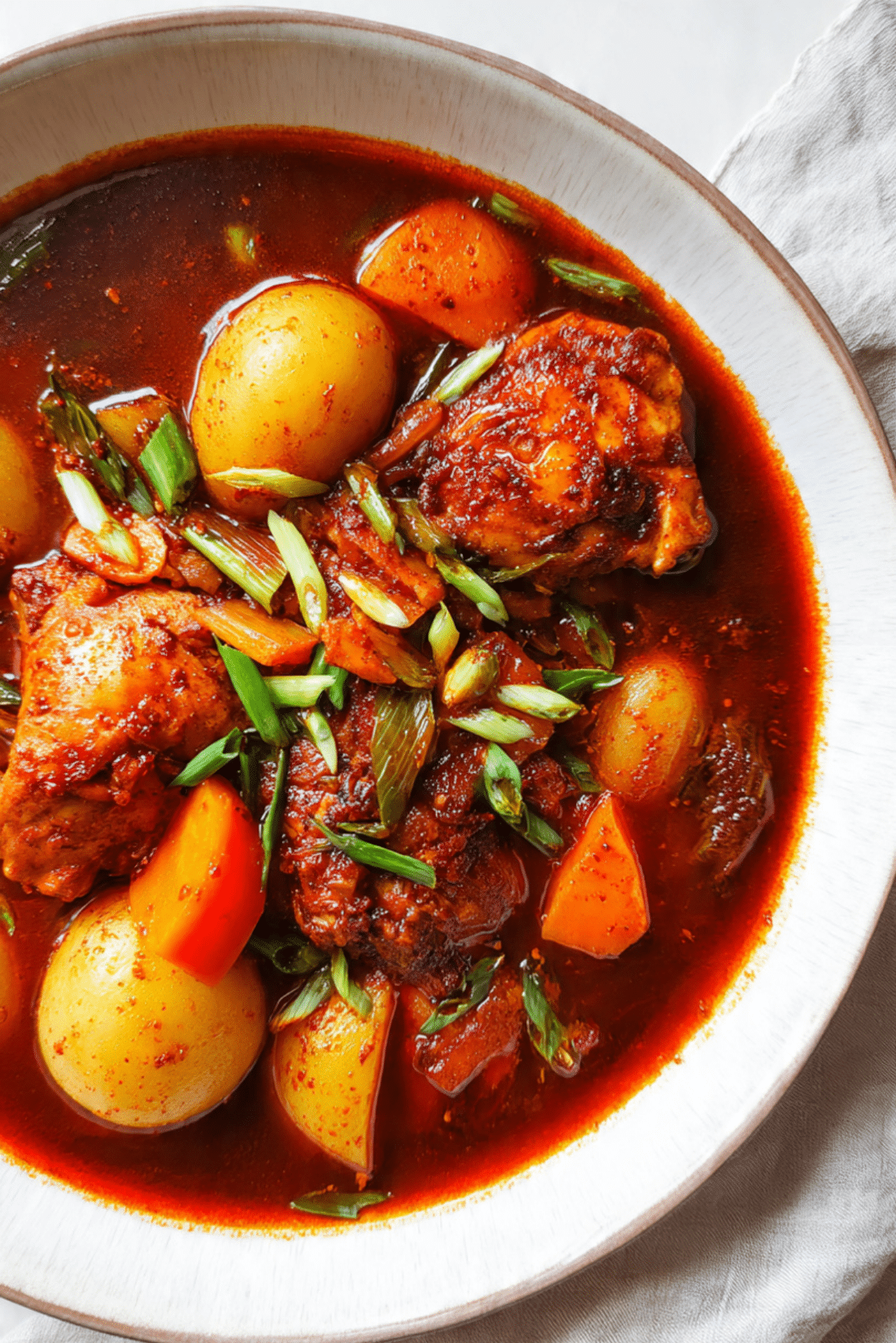
The final pot is already gorgeous with its glossy red broth and bright green onions, so you do not need much to make it table-worthy. Serve it in a wide, shallow bowl or bring the whole pot right to the table for that dramatic, bubbling moment.
A sprinkle of toasted sesame seeds adds a little contrast, and a few extra green onion slices make the colors pop. Let the chicken and vegetables sit visibly at the top instead of hiding everything under broth. That simple move makes the whole dish look abundant and irresistible.
Fun Variations to Try Next Time
Once you have made the classic version, there are plenty of good ways to make it your own.
Add mushrooms
Stir in shiitake or cremini mushrooms during the last 15 minutes of cooking for extra earthiness and a little meaty texture.
Use boneless thighs
This makes the stew easier to eat and slightly faster to prepare, while still keeping plenty of flavor.
Turn up the heat
Add an extra tablespoon of gochugaru or a sliced Korean green chili if you want the broth bolder and hotter.
Make it brothier
Add an extra 1/2 to 1 cup of stock if you want more liquid for spooning generously over rice.
Add zucchini at the end
For a softer, lighter vegetable note, stir in thick zucchini slices during the last 8 minutes of simmering.
FAQ’s
Q1: Can I use boneless chicken for this recipe?
Yes, you can. Boneless chicken thighs work especially well because they stay juicy and tender, even after simmering.
Q2: Is this dish very spicy?
It has a definite kick, but it is balanced by the potatoes, onion, and carrot. You can lower the gochugaru slightly if you want a gentler heat.
Q3: What should I serve with it?
Steamed rice is the best match. It soaks up the sauce and balances the spicy, savory flavors perfectly.
Q4: Can I make it ahead of time?
Yes. In fact, the flavor gets even better after it sits, so it is a great make-ahead dinner.
Q5: Can I freeze it?
Yes, it freezes well for up to 2 months. Just cool it fully before packing it into airtight containers.
Q6: What kind of potatoes work best?
Yukon Gold or red potatoes are both great because they hold their shape while still becoming tender.
Q7: Can I make it less spicy without losing flavor?
Yes. Reduce the gochugaru a little, but keep the gochujang so you still get that deep, savory character.
Q8: Why is my sauce too thin?
It may just need a few more minutes uncovered. Let it simmer gently so the broth reduces and becomes slightly richer.
Q9: Can I add more vegetables?
Absolutely. Mushrooms, zucchini, or daikon are all good additions that fit naturally with the flavor of the stew.
Q10: How do I know when the chicken is done?
The chicken should be tender, cooked through, and easy to pull from the bone, while the potatoes should be soft when pierced with a fork.
Conclusion
This is the kind of meal that fills the kitchen with promise and delivers on every bit of it. It is bold, cozy, rich, and deeply satisfying, with tender chicken and vegetables tucked into a spicy, glossy broth that begs for a bowl of rice on the side. Trust me, once you make it, this one will earn a regular spot in your dinner rotation.
Print
Korean-Style Spicy Chicken Stew
- Prep Time: 20 minutes
- Cook Time: 35 minutes
- Total Time: 55 minutes
- Yield: 4 servings 1x
- Category: Main Course
- Method: Stewing
- Cuisine: Korean
- Diet: Low Lactose
Description
A cozy, bold Korean-style spicy chicken stew made with tender bone-in chicken, potatoes, carrots, and onions simmered in a rich gochujang and gochugaru sauce. It is hearty, savory, gently sweet, and perfect served hot with steamed rice.
Ingredients
- 2 1/2 pounds bone-in, skinless chicken thighs and drumsticks, cut into serving pieces
- 2 medium Yukon Gold potatoes, about 12 ounces total, cut into large chunks
- 1 large carrot, cut into thick chunks
- 1 medium yellow onion, cut into wedges
- 3 green onions, cut into 2-inch pieces
- 2 cups water or low-sodium chicken stock
- 3 tablespoons gochujang
- 2 tablespoons gochugaru
- 2 tablespoons soy sauce
- 2 tablespoons rice wine
- 1 tablespoon brown sugar
- 1 tablespoon garlic, minced
- 1 teaspoon fresh ginger, grated
- 1/4 teaspoon black pepper
- 1 teaspoon toasted sesame seeds, for garnish
Instructions
- Set a heavy pot or Dutch oven over medium heat.
- In a mixing bowl, stir together the gochujang, gochugaru, soy sauce, rice wine, brown sugar, minced garlic, grated ginger, and black pepper until smooth.
- Add the chicken pieces to the pot, then layer in the potatoes, carrot, and onion.
- Pour the sauce mixture over the chicken and vegetables, then add the water or stock. Gently turn everything so the sauce begins coating the ingredients.
- Bring to a gentle boil, then reduce to a steady simmer. Cover partially and cook for 30 to 35 minutes, stirring once or twice, until the chicken is tender and the potatoes are soft.
- Add the green onions during the last 3 minutes of cooking.
- Taste and adjust the seasoning if needed, then garnish with toasted sesame seeds.
- Serve hot with steamed rice.
Notes
- Use bone-in chicken for the richest broth and the juiciest texture.
- Keep the vegetable chunks fairly large so they hold their shape during simmering.
- If the broth feels too thin at the end, simmer uncovered for a few more minutes.
- Leftovers taste even better the next day after the flavors have had time to deepen.
Nutrition
- Serving Size: 1 serving
- Calories: 430
- Sugar: 8g
- Sodium: 760mg
- Fat: 20g
- Saturated Fat: 5g
- Unsaturated Fat: 13g
- Trans Fat: 0g
- Carbohydrates: 24g
- Fiber: 3g
- Protein: 36g
- Cholesterol: 145mg
Keywords: Korean spicy chicken stew, dakdoritang, dakbokkeumtang, spicy chicken, chicken stew, gochujang chicken, Korean comfort food